Case Study · Strategy · 2025
Incentivized Reviews Strategy
Driving review participation through loyalty without compromising authenticity. A cross-functional initiative that grew daily review volume by 300% across the AE + Aerie catalog.
Role
Product Strategist
Company
American Eagle Outfitters
Scope
15M+ Loyalty Members
Tools
Miro · Figma
Overview
The opportunity
Product pages across the AE and Aerie catalog were under-reviewed. Sparse coverage meant customers had limited peer input when making purchase decisions, and merchandising teams were flying blind on qualitative product feedback.
Both problems pointed to the same root cause: customers had no clear reason to come back and write a review after purchase. I partnered with a fellow Product Strategist on a cross-functional initiative to introduce loyalty-based review incentives, using the AE + Aerie Real Rewards program's 15M+ members as the addressable audience, growing participation at scale without sacrificing the authenticity that makes review content worth reading.
The Problem
Not enough reviews to actually help anyone
PDPs with sparse review coverage create friction at one of the most critical decision points in the purchase journey. Without peer input, customers have less confidence buying, particularly for new or lower-awareness products.
Low participation rate
The gap between customers who purchase and those who leave reviews was significant and growing.
Conversion impact
Reviews influence conversion, return rates, and the quality of feedback available to merchandising.
Structural problem
Closing the gap required a structural change to the value exchange, not a messaging fix.
Problem Statement
“How might we increase review participation across the AE + Aerie catalog at scale, in a way that grows content volume without introducing authenticity risk or compromising shopper trust?”
Research
The motivation was already there. It just needed a door.
Industry data backed the strategic direction. The question wasn't whether incentives would drive participation — research suggested they would. The question was how to structure the incentive so it motivated behavior without distorting it.
0%
of consumers say they'd be motivated to write a review if offered an incentive
PowerReviews
0%
of consumers want to be rewarded for engagement beyond purchase
Industry Research
Academic backing
A 2021 Journal of Marketing Research study by Woolley and Sharif found that “incentives increase review volume primarily through a selection effect, motivating people who would not typically post to participate.” Importantly, the same study found incentives also increase the relative positivity of review content, which informed our decision to build transparent disclosure in from day one rather than treat it as a legal checkbox.
Competitive Research
How others had solved it
We looked at how other retailers tackled incentivized review programs, focusing on three questions: how was the incentive framed, what eligibility and verification logic was in place, and what guardrails were protecting review quality?
Abercrombie
Loyalty-linked review program with visible reward labeling, email-matched verification, and post-moderation award logic.
Adidas
Loyalty-linked program with transparent incentive disclosure on published reviews and moderation-gated reward release.
Old Navy
Points-for-reviews program with email-matched verification and visible incentive labels on reviewer cards.
Consistent finding across competitors
Incentives increase participation. Guardrails and framing determine whether the resulting content is useful. The most durable insight: the primary motivation for leaving a review is wanting to help other shoppers. Incentives give people a nudge to act on it.
Strategy
Giving customers a reason to show up
We approached this as a value exchange design problem. Three principles shaped the strategy, drawn from competitive research, behavioral science, and an honest look at platform constraints.
Framing matters
Points positioned as appreciation for sharing feedback drove meaningfully different behavior than points positioned as payment. Recognition felt genuine; transactional framing introduced authenticity risk.
Transparency builds trust
Incentivized reviews labeled visibly as such did not suppress readership. Shoppers expected disclosure and responded better to it than to unlabeled programs.
Launch lean and learn
Competitors consistently launched with minimal controls, used real behavioral data to understand what drove quality, and refined guardrails in subsequent phases. Overbuilding Phase 1 would delay the learning.
Execution
Getting everyone in the room before anyone made decisions
My co-strategist and I facilitated a cross-functional workshop using MoSCoW prioritization, bringing product, engineering, marketing, legal, and UX into the same room before any design decisions were locked. The goal was to surface constraints early, align on scope, and bake legal requirements around incentivized review disclosure into the design from the start.
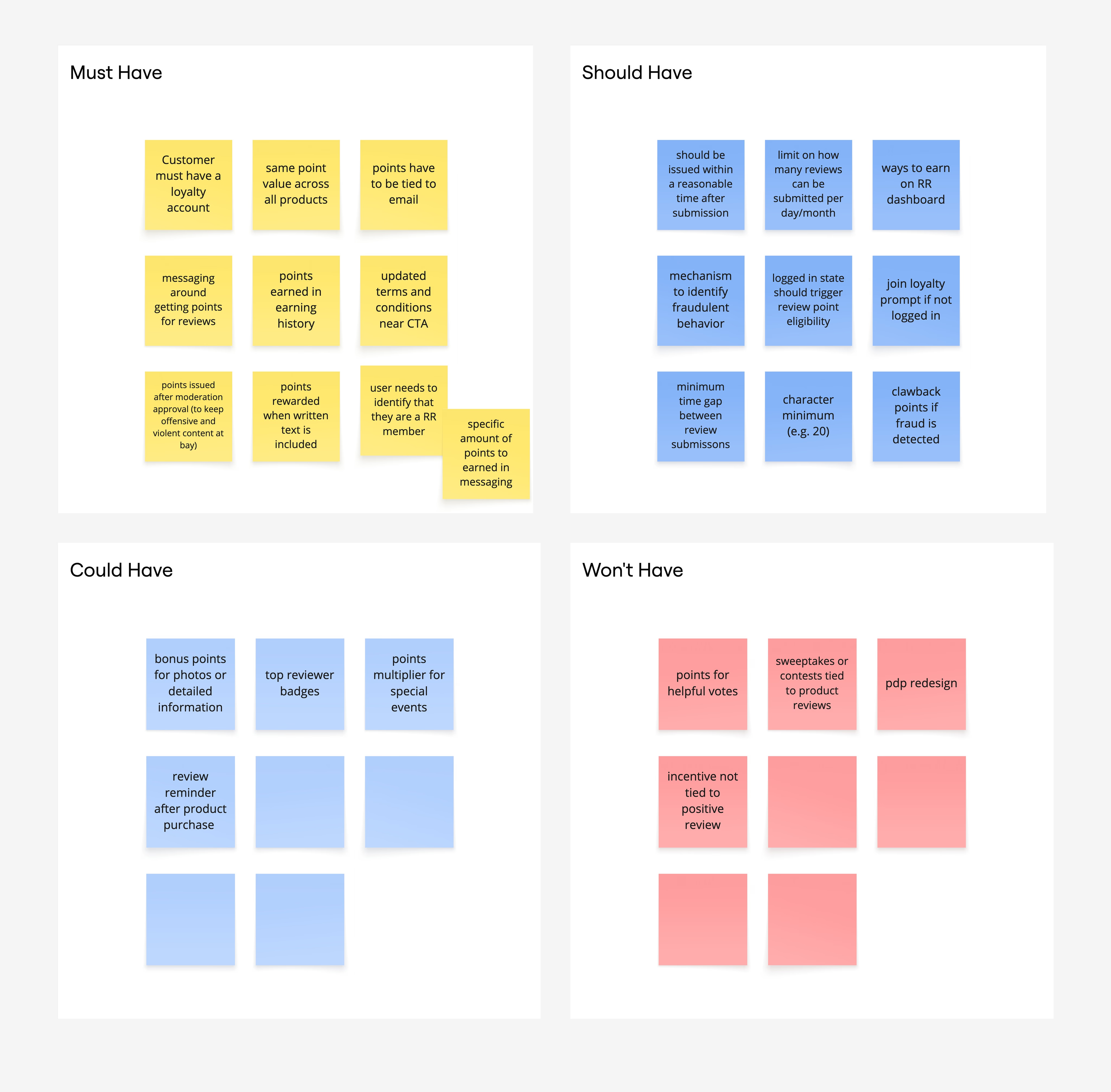
The MoSCoW board
Requirements sorted live in the workshop · Product, Engineering, Marketing, Legal, UX
Three designed behaviors anchored the build:
Loyalty prompt at point of submission
Customers were asked to confirm or join the loyalty program while submitting a review, reducing friction at the highest-intent moment.
Email-matched points release
Loyalty accounts were matched by submitted email, triggering automated reward delivery after moderation approval. No forced sign-in. Reward was tied to approval, not sentiment.
Visible incentive labeling
Published reviews that earned points carried a visible tag. Transparent by design, not buried in footnotes. Baked in from day one rather than treated as a legal checkbox.
Existing infrastructure, maximum leverage
The existing BazaarVoice platform already supported incentivized review logic with no new platform or significant re-architecture required. CrowdTwist handled loyalty verification on the backend. Phase 1 was scoped to maximize impact within what already existed.
Final Screens
What shipped
Two surfaces where the incentive program became visible to customers: the submission form and the published review list.
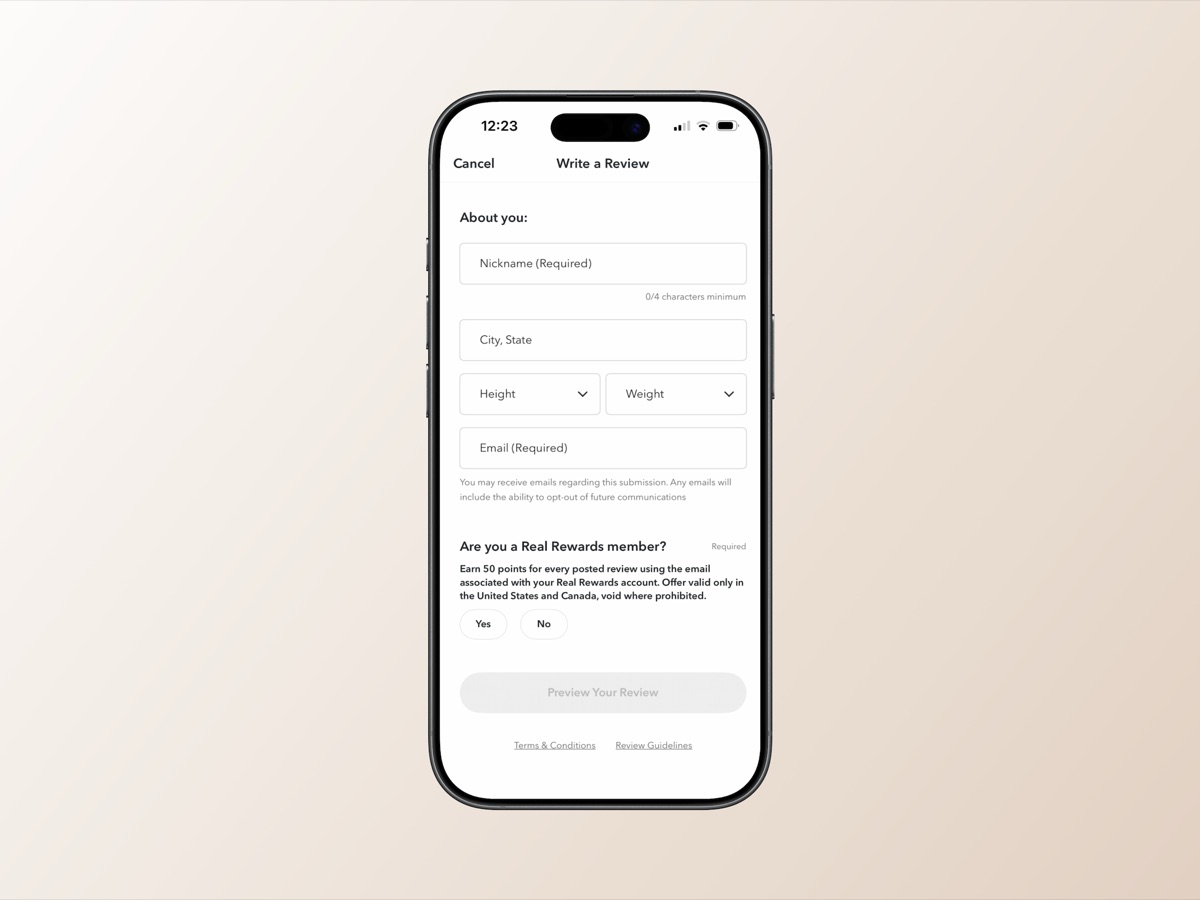
Loyalty prompt at submission
The Real Rewards points offer surfaced inline during review submission, at the highest-intent moment, with no extra steps.
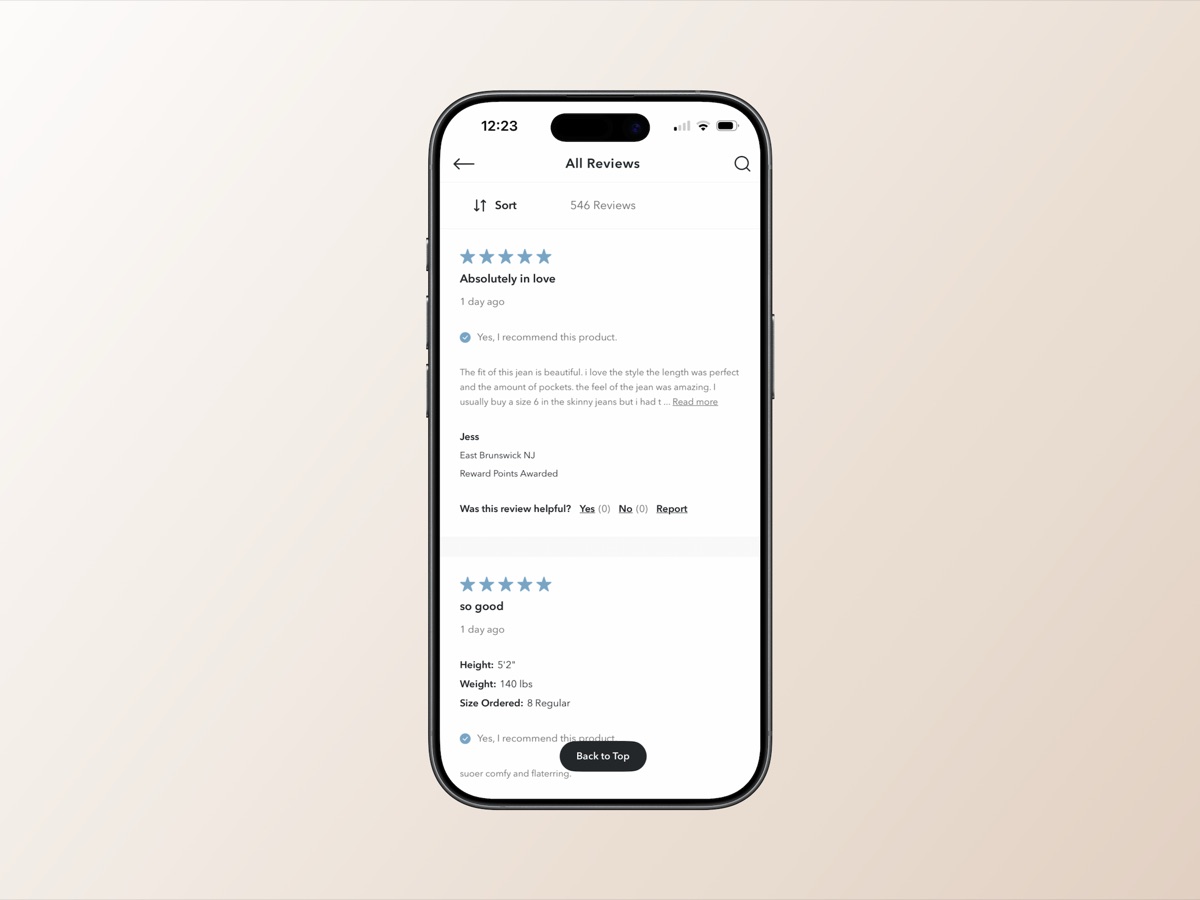
Visible incentive labeling
Published reviews that earned points carry a visible “Reward Points Awarded” label, transparent by design and not buried in footnotes.
Outcomes
The numbers moved. So did our thinking.
0%
increase in daily review volume
Reaching approximately 1,500 reviews per day
Running a workshop that ended in decisions, not notes
Getting real cross-functional alignment on an ambiguous initiative is genuinely hard. This session produced a scoped MVP with buy-in across every function at the table.
Naming the tradeoffs out loud before launch
The team went in with clear awareness of the tradeoffs, which meant quality issues were tracked from day one rather than discovered and explained post-launch.
Keeping the build inside existing infrastructure
Using BazaarVoice and CrowdTwist rather than standing up new systems made Phase 1 achievable without a lengthy engineering cycle.
Secondary benefit
The review flow prompted loyalty sign-ups from customers who had not previously enrolled, giving the program an organic growth engine at a natural moment of brand engagement.
Accepted tradeoffs, tracked from day one
The program produced a measurable but expected quality tradeoff: both high-quality and lower-effort submissions increased. That was an accepted Phase 1 outcome, not a surprise. It gave us the real behavioral data needed to sharpen guardrails in a future phase.
Quality tradeoff anticipated and documented pre-launch
Behavioral data collected to inform Phase 2 guardrails
Moderation-gated reward release tied to approval, not sentiment
Transparent labeling protected long-term review credibility
Longer-Term Impact
Beyond the feature
The workshop became a template
“The cross-functional workshop model used here ended up becoming something of a reference point for how to run alignment sessions on ambiguous initiatives. The structure, the research-grounded framing, and the early legal involvement carried into subsequent loyalty and engagement work across the team.”
The strategic direction aged well
“According to Antavo's Global Customer Loyalty Report, rewarding non-transactional activities like reviews is one of the most effective levers for reducing member churn, something 65% of loyalty program owners now actively track. The direction we chose in Phase 1 has only become more relevant.”
Tradeoffs named upfront, tracked throughout
“Naming the tradeoffs out loud before launch meant the quality tradeoffs were tracked from day one rather than discovered and explained post-launch. That felt like the right way to run a program built on trust.”